BIRDING GUIDE · AGADIR, MOROCCO
Where to See the Northern Bald Ibis in Morocco
By Agadir Birding Tours · GREPOM-certified birding guides in Agadir · Updated October 2026
Short answer: the best place in the world to see a wild Northern Bald Ibis is the Atlantic coast of south-west Morocco, between Souss-Massa National Park (south of Agadir) and Tamri (about 55 km north of Agadir). This area holds the last truly wild breeding population of the species. The birds are present all year, and they are usually seen feeding in open coastal steppe and dunes, especially in the morning.
About the Northern Bald Ibis
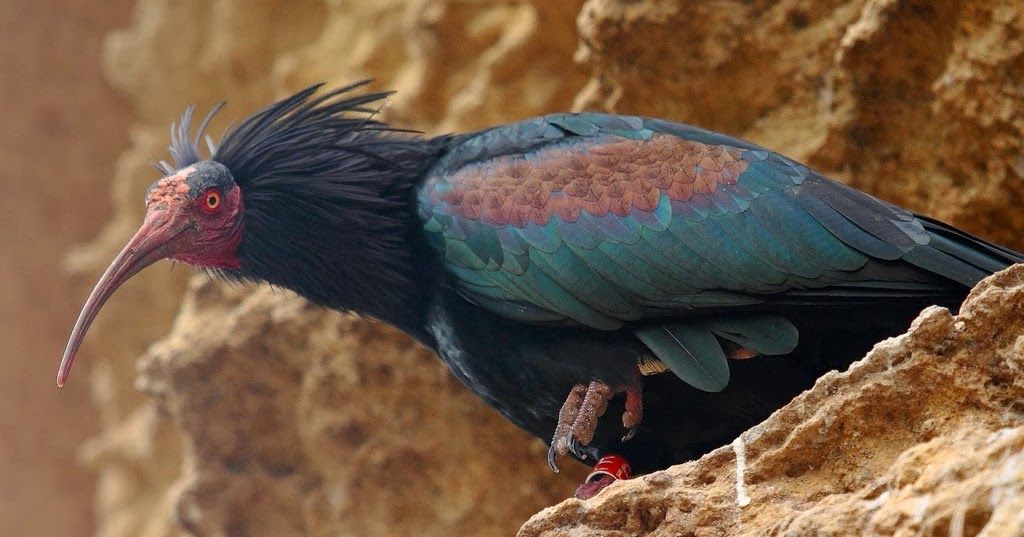
The Northern Bald Ibis (Geronticus eremita), also called the Waldrapp, is one of the rarest birds on Earth. It is a large, glossy black ibis with a bare red face, a long curved red bill and a scruffy crest of feathers on the back of its neck. In the sun, its plumage shines with green, bronze and purple tones.
The species once lived across North Africa, the Middle East and southern and central Europe, but it disappeared from Europe several centuries ago and its numbers collapsed during the 20th century because of hunting, habitat loss, pesticides and disturbance. By the end of the 1990s, only around 50 breeding pairs survived in the wild, almost all of them in Morocco.
Key facts
- Scientific name: Geronticus eremita
- Status: Endangered (IUCN), downlisted from Critically Endangered in 2018
- Size: 70–80 cm long, wingspan 125–135 cm
- Wild stronghold: Souss-Massa National Park and Tamri, Morocco
- Diet: beetles, lizards, insects and other small animals found in sandy soil
- Nests: in colonies on coastal cliffs
A Moroccan conservation success story
Thanks to years of protection by Souss-Massa National Park, local wardens and conservation partners including GREPOM/BirdLife Maroc and SEO/BirdLife, the Moroccan population has grown steadily. Record breeding seasons were recorded in the 2010s, and recent counts reported more than 140 breeding pairs and around 700 birds in the Souss-Massa and Tamri colonies. This recovery is why the species was moved from “Critically Endangered” to “Endangered” on the IUCN Red List in 2018. It is still one of the world’s most threatened birds, which makes every sighting special.
Want to see it with an expert?
Join our private Northern Bald Ibis tour from Agadir, with a GREPOM-certified guide, telescope and hotel pickup. From €60.
Where exactly can you see the Northern Bald Ibis?
The whole wild population lives along a short stretch of Atlantic coast around Agadir. There are two main areas.
1. Tamri and the coast north of Agadir
Tamri, about 55 km north of Agadir on the coastal road towards Essaouira, is the most famous place to see the species. The birds nest on sea cliffs and fly inland to feed on the sandy dunes, coastal steppe and fields around the village and the mouth of the Oued Tamri. They can sometimes be seen surprisingly close to the road while feeding.
2. Souss-Massa National Park, south of Agadir
The park stretches along the coast between the Oued Souss and the Oued Massa. Several colonies breed on its cliffs, and the birds feed in the open coastal steppe. A visit to the park can also be combined with the Oued Massa estuary, one of the best wetlands in Morocco for flamingos, spoonbills, herons and waders.
Why we don't publish exact locations
Nesting colonies are strictly protected and entering them is forbidden. Like other responsible birding operators, we never publish precise nest or roost sites online. Feeding flocks move from day to day depending on the weather, food and season, so finding them is often easier with a local guide who follows recent sightings.
When is the best time to see the Northern Bald Ibis?
The good news: the Northern Bald Ibis does not migrate away from Morocco, so you can look for it all year round. What changes is how the birds behave.
| Season | What to expect |
|---|---|
| Winter (Dec–Feb) | Birds gather in flocks and feed in coastal steppe. Often a very good time for sightings, with pleasant temperatures. |
| Spring (Mar–May) | Breeding season. Adults feed actively and fly back and forth to the colonies. Excellent combined with spring migration. |
| Summer (Jun–Aug) | Young birds join the adults after fledging. Go early in the morning, before the heat. |
| Autumn (Sep–Nov) | Flocks of adults and juveniles move along the coast. Combine with autumn migration at the estuaries. |
Best time of day: early to mid-morning, when the birds are actively feeding and the light is soft for photography.
How to see the Northern Bald Ibis responsibly
- Never approach or enter nesting cliffs: it is forbidden and can cause breeding failure
- Keep your distance from feeding birds and use binoculars or a telescope instead
- Stay on tracks and paths, and watch from your vehicle when birds are near the road
- No drones, no playback, no flash
- Don't share exact locations on social media
- Go with a local guide who knows the rules and supports the protection of the species
Sometimes the best photograph is not the closest one: a bird feeding calmly in its natural landscape tells a much better story.
Photos from our Northern Bald Ibis tours
A few moments from our recent tours on the Agadir coast. Click a photo to see it full size.
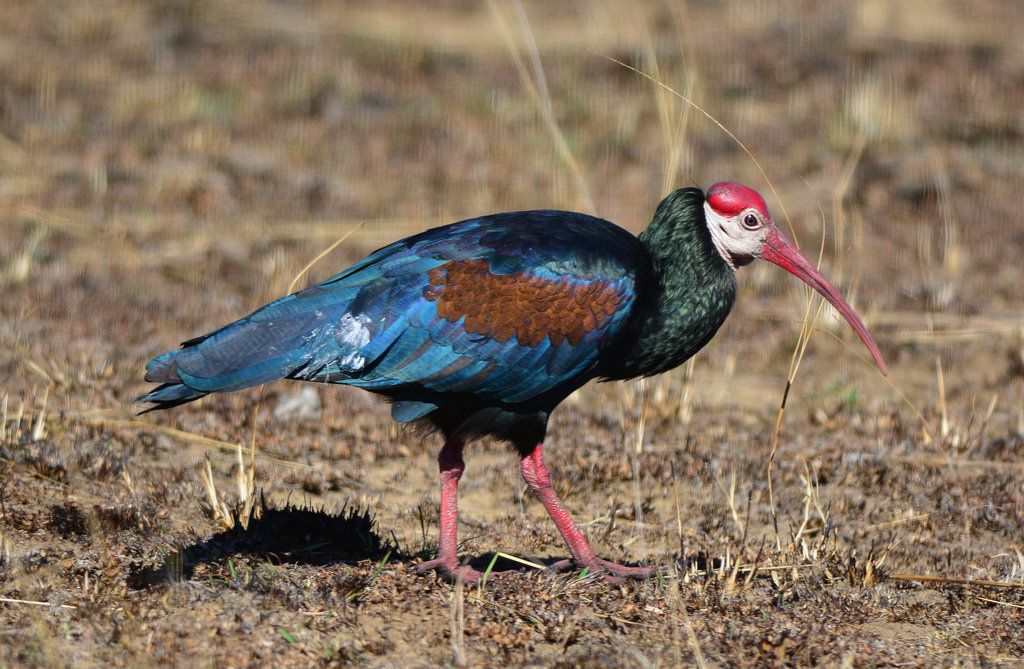
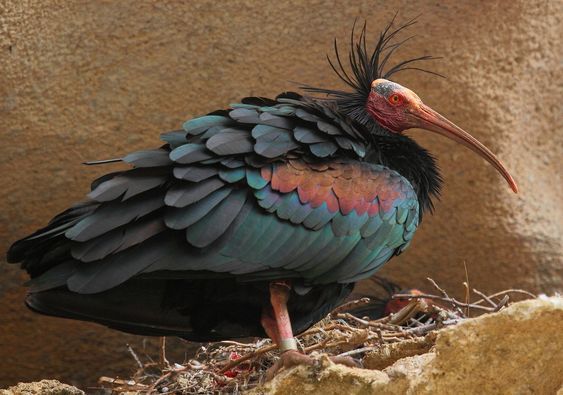
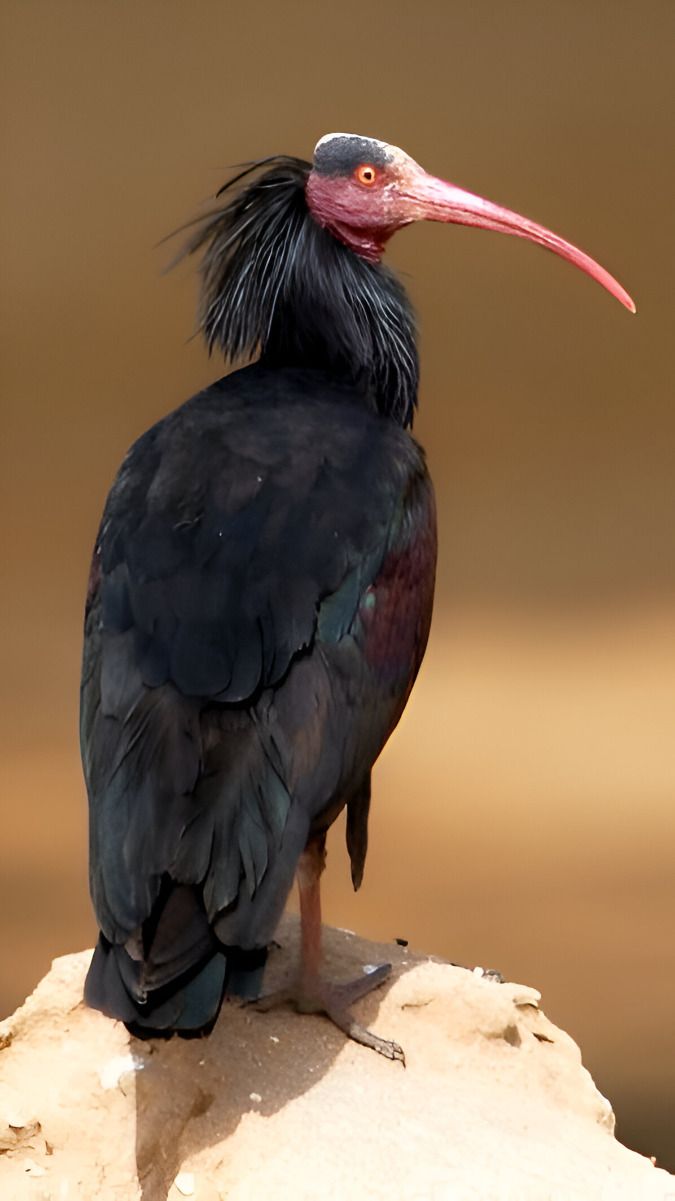
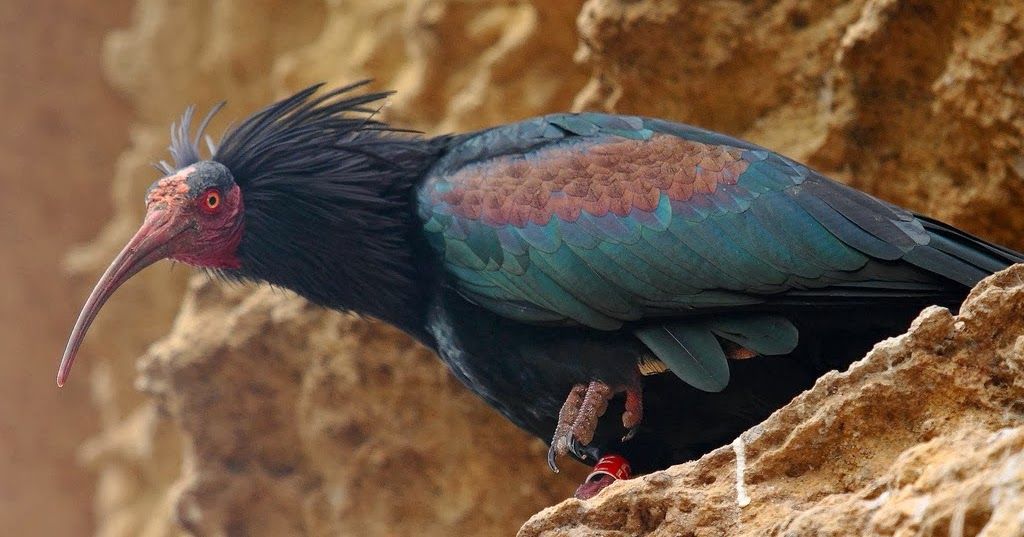
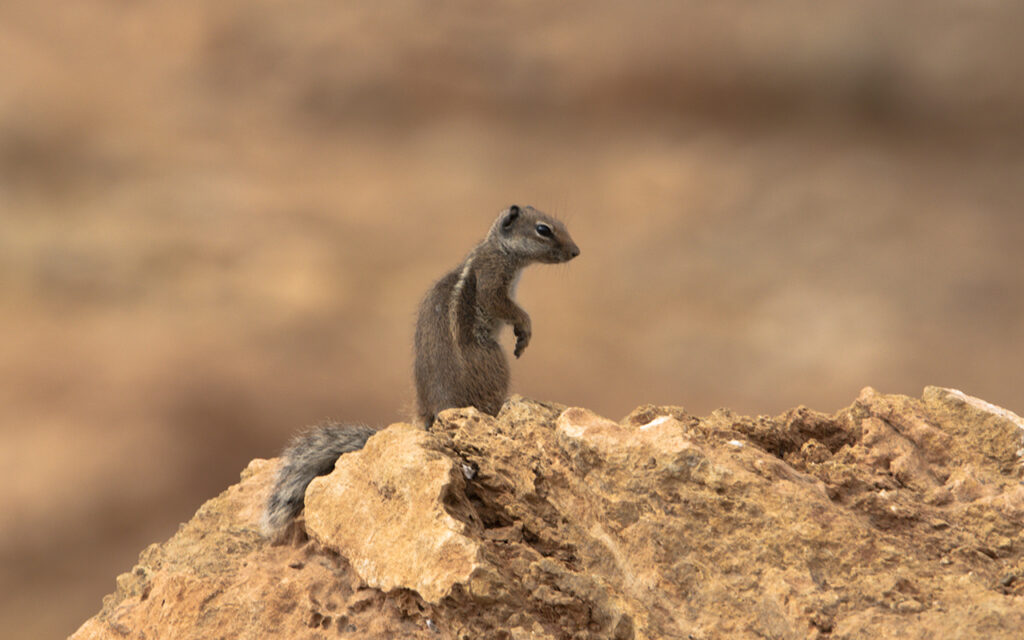
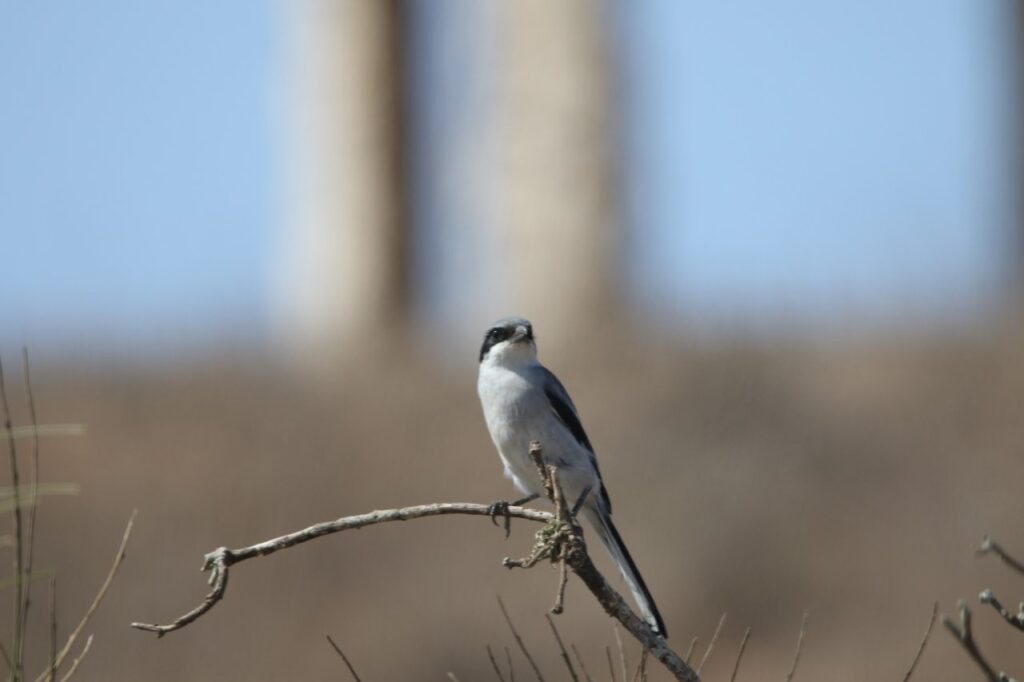
Photos © Agadir Birding Tours.
Other birds you can see in the same area
A morning searching for the Northern Bald Ibis often produces many other Moroccan specialities, including:
- Moussier's Redstart, a beautiful North African endemic
- Audouin's Gull along the coast
- Thekla's Lark and Crested Lark
- Black-eared Wheatear and Great Grey Shrike
- Sardinian and Spectacled Warblers
- At Oued Massa: Greater Flamingo, Eurasian Spoonbill, Marbled Duck and many waders
Make a full day of it
Our full-day tour combines the Northern Bald Ibis with Souss-Massa National Park and Oued Massa, lunch included. From €120.
How to get there from Agadir
- Tamri: about 55 km north of Agadir on the N1 coastal road, roughly an hour by car
- Souss-Massa National Park: the northern part starts just south of Agadir; Oued Massa is about an hour's drive south
- Without a car: public transport does not reach the feeding areas, so a guided tour with hotel pickup is the simplest option
Frequently asked questions
The best place is the Atlantic coast of south-west Morocco, between Souss-Massa National Park and Tamri near Agadir. This area holds the last truly wild breeding population of the species.
Yes. The Moroccan birds stay in the region all year. Winter and spring are often the easiest seasons, and early morning is the best time of day.
Recent counts in Morocco reported more than 140 breeding pairs and around 700 birds in the Souss-Massa and Tamri colonies. Small reintroduced populations also exist in Europe, and a semi-wild colony is managed in Turkey.
Yes. It is listed as Endangered on the IUCN Red List. It was downlisted from Critically Endangered in 2018 thanks to the recovery of the Moroccan population.
It is not required, but a local guide greatly increases your chances, because feeding flocks move every day and nesting areas are protected. A guide also makes sure the birds are watched without disturbance.
See the Northern Bald Ibis with Agadir Birding Tours
Private tours from Agadir with GREPOM-certified guides, a telescope and hotel pickup. Tell us your dates and we’ll plan the best time to go.