Agadir · Morocco
Best Birds of Agadir: A Guide to the Birds of Souss-Massa
Discover Morocco’s richest birding destination with experienced local guides. Join private birdwatching tours around Morocco.
Let's plan your birding tour
BIRDING GUIDE · AGADIR & SOUSS-MASSA
Birds of Agadir: A Guide to the Birds of Souss-Massa
By Agadir Birding Tours · GREPOM-certified birding guides · Updated October 2026
In short: Agadir is one of the best places in Morocco for birds. More than 300 species have been recorded in the wider Souss-Massa region, thanks to a mix of Atlantic coast, estuaries, river wetlands, coastal steppe and argan woodland on one of the main migration routes between Europe and Africa. The stars are the Northern Bald Ibis, Moussier’s Redstart, Black-crowned Tchagra, Audouin’s Gull and Marbled Duck, alongside flamingos, spoonbills and huge numbers of waders. The best time is from October to May, with peaks during spring and autumn migration.
Agadir birding at a glance
| Species recorded | More than 300 in the wider Souss-Massa region |
| Signature birds | Northern Bald Ibis, Moussier’s Redstart, Black-crowned Tchagra, Audouin’s Gull, Marbled Duck |
| Main habitats | Atlantic coast, estuaries and lagoons, river reedbeds, coastal steppe and dunes, argan woodland, sea cliffs |
| Top sites | Oued Souss estuary, Souss-Massa National Park, Oued Massa, Tamri, Cap Ghir, the Souss plain |
| Best season | October to May; peak migration in March–April and September–October |
| Typical day list | Often 50 to 80 species in a full day in spring or winter |
12 birds you should look for around Agadir
These are the species birders travel to Agadir for, the ones that are hard or impossible to see in Europe:
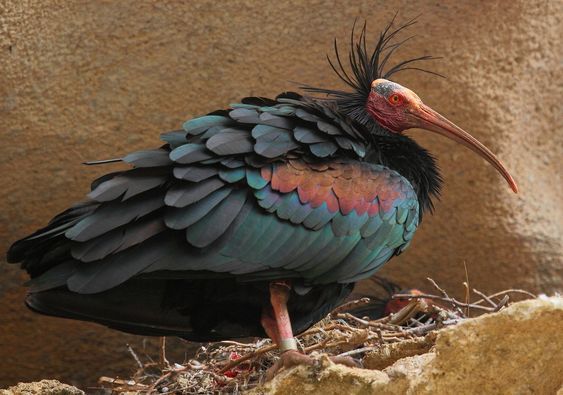
1. Northern Bald Ibis
Geronticus eremita · Endangered
One of the world’s rarest birds. The last truly wild breeding population lives on the coast between Souss-Massa National Park and Tamri. Look for flocks feeding in coastal steppe and dunes, especially in the morning. Read our full guide.
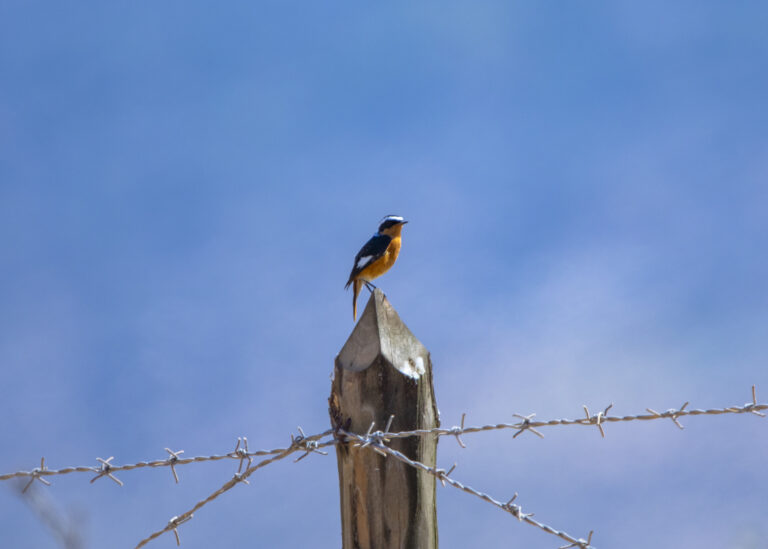
2. Moussier's Redstart
Phoenicurus moussieri · North African endemic
A stunning orange, black and white redstart found only in north-west Africa. Common in scrub, argan woodland and field edges around Agadir, Tamri and Massa.
3. Black-crowned Tchagra
Tchagra senegalus · Local speciality
A secretive bush-shrike with a beautiful whistling song. Most often heard, then seen, in thick scrub and gardens along the Oued Massa.
4. Audouin's Gull
Ichthyaetus audouinii · Vulnerable species
An elegant gull with a dark red bill, regular on beaches and at river mouths, including the Oued Souss estuary and Oued Massa.
5. Marbled Duck
Marmaronetta angustirostris · Threatened duck
A pale, shy duck of reedy wetlands. The Oued Massa is one of the most reliable sites for it in Morocco.
6. Barbary Partridge
Alectoris barbara · North African speciality
A colourful partridge of rocky slopes and scrub, often seen running across tracks near Tamri and in the hills.
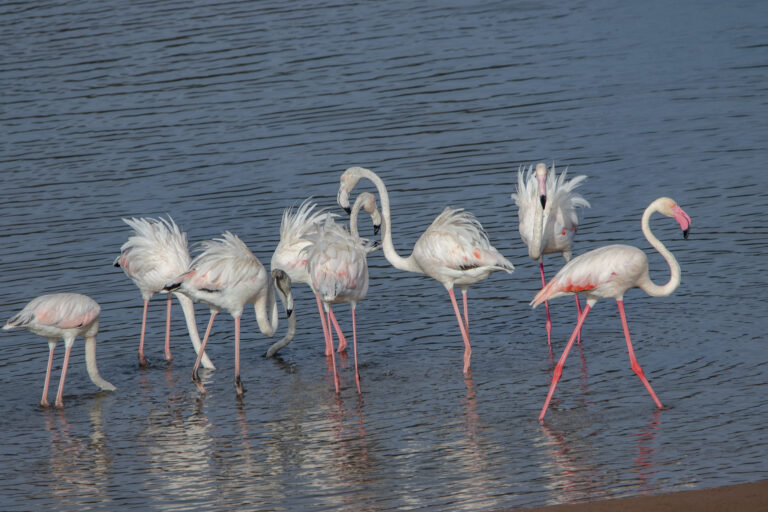
7. Greater Flamingo
Phoenicopterus roseus · Wetlands
Flocks feed at the Oued Souss estuary and Oued Massa for much of the year.
8. Eurasian Spoonbill
Platalea leucorodia · Wetlands
Regular at both estuaries, often roosting with flamingos and herons.
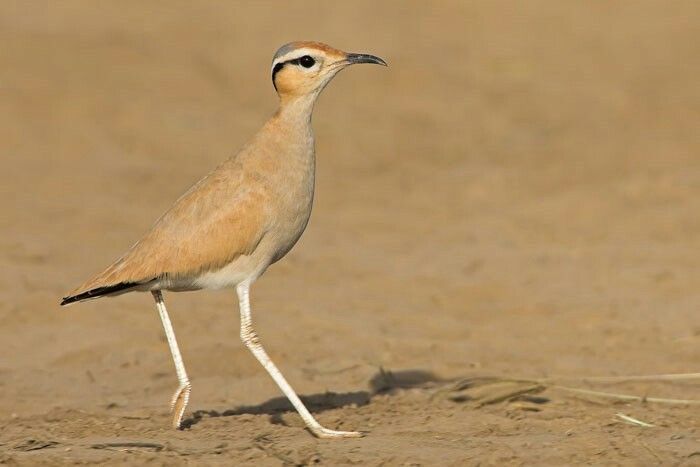
9. Cream-coloured Courser
Cursorius cursor · Steppe and desert edge
A fast-running, sand-coloured wader of open stony ground near Massa village and the coastal plain.
10. Black-bellied Sandgrouse
Pterocles orientalis · Steppe
Often seen flying in to drink at the Oued Massa early in the morning.
11. Barbary Falcon
Falco pelegrinoides · Cliffs and coast
A pale desert relative of the Peregrine, hunting along coastal cliffs and over the plains.
12. Black-winged Kite
Elanus caeruleus · Farmland
A small grey-and-white raptor that hovers over fields and orchards on the Souss plain.
See these birds with a local expert
Our half-day and full-day tours visit the Oued Souss, Souss-Massa National Park, Oued Massa and Tamri, with hotel pickup in Agadir and a professional telescope. From €90.
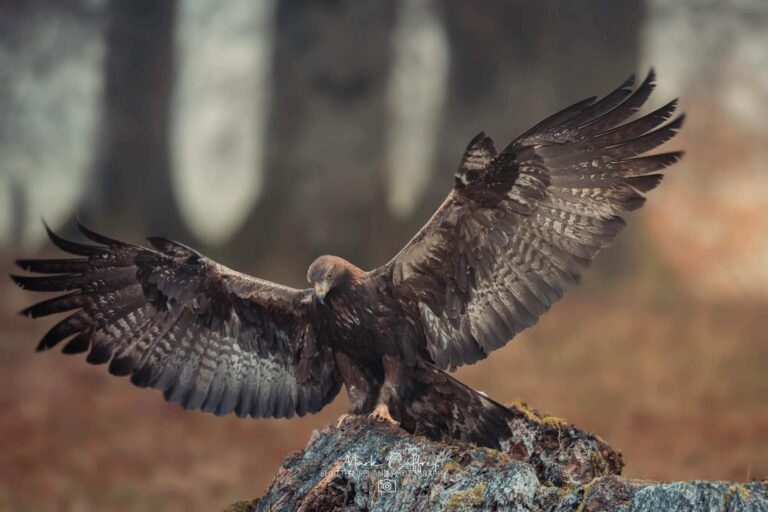
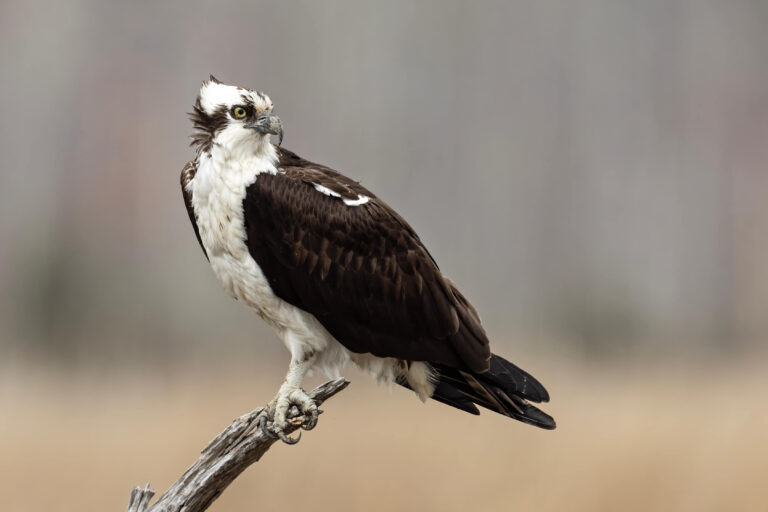
Photos of birds around Agadir
Birds of Agadir by habitat
Estuaries and coastal lagoons
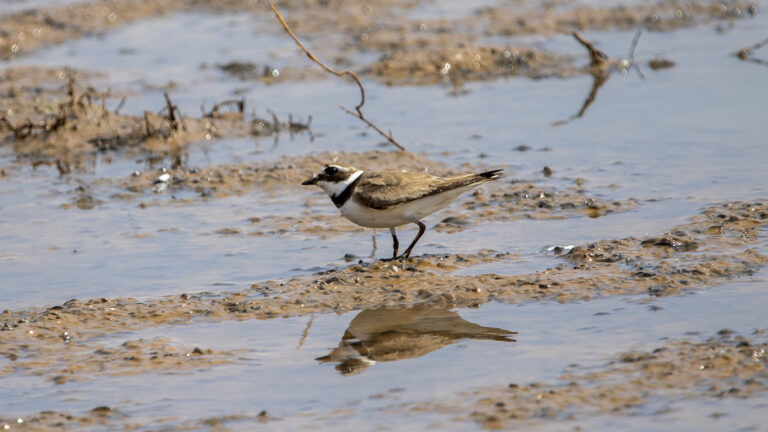
The Oued Souss estuary, on Agadir’s southern edge, is an important stopover for waders and gulls. Expect Greater Flamingo, Eurasian Spoonbill, Grey Heron, Little Egret, Black-winged Stilt, Common Ringed and Grey Plovers, Kentish Plover, Curlew Sandpiper, Ruff, Common Redshank and Greenshank, Eurasian Curlew and Whimbrel, plus Caspian, Sandwich and Gull-billed Terns, Audouin’s, Yellow-legged, Lesser Black-backed and Black-headed Gulls, and often an Osprey fishing.
River wetlands and reedbeds
The Oued Massa is the richest wetland near Agadir. Its lagoon and reedbeds hold Marbled Duck, Ruddy Shelduck, Glossy Ibis, Eurasian Coot (large flocks in winter), Purple Swamphen, herons, crakes and warblers, with Western Marsh Harrier quartering the reeds. Common Crane is a regular winter visitor.
Coastal steppe, dunes and desert edge
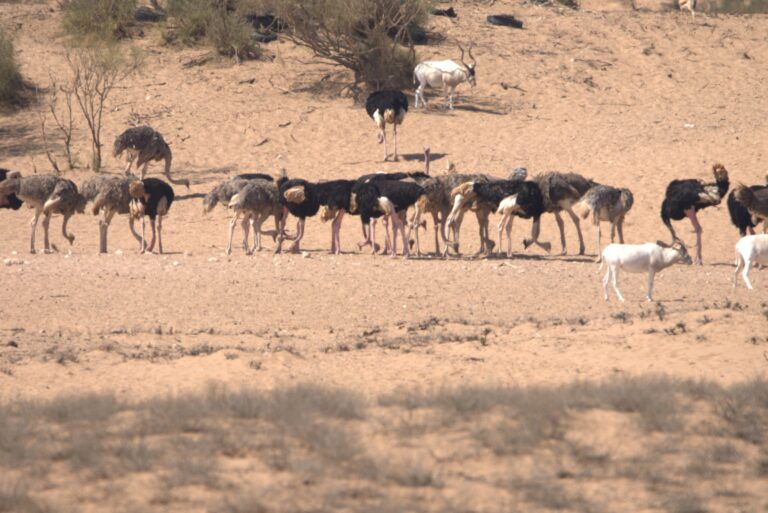
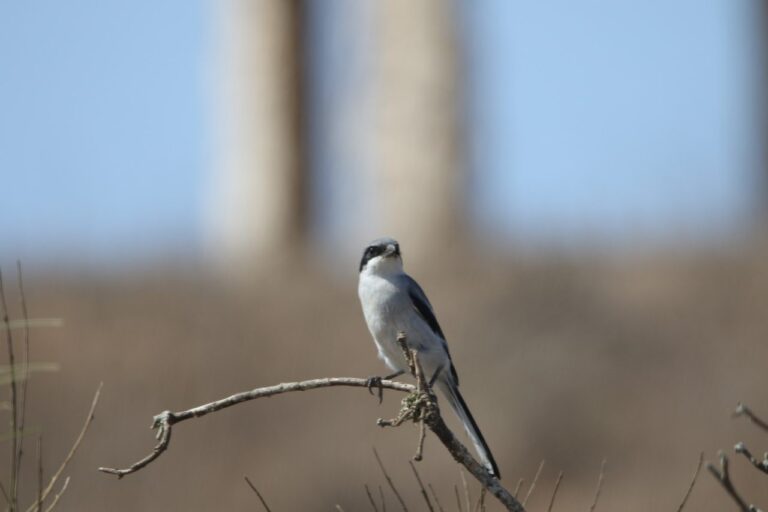
Inside Souss-Massa National Park and around Massa village, open steppe and sandy ground support Cream-coloured Courser, Black-bellied Sandgrouse, Eurasian Stone-curlew, Thekla’s, Crested and Mediterranean Short-toed Larks, Southern Grey Shrike and, on the coast, the Northern Bald Ibis.
Argan woodland, scrub and gardens
The argan trees and scrub of the Souss plain are home to Moussier’s Redstart, Black-crowned Tchagra, Sardinian Warbler, Common Bulbul, Laughing Dove, House Bunting, Spotless Starling, the North African race of Eurasian Magpie, Woodchat Shrike in spring, and Rufous-tailed Scrub Robin and Red-necked Nightjar in summer.
Sea cliffs and seawatching
North of Agadir, the cliffs at Tamri and Cap Ghir hold Barbary Falcon, Blue Rock Thrush, Northern Raven and Pallid and Plain Swifts. During migration, seawatching from Cap Ghir can produce Northern Gannet, Cory’s and other shearwaters, skuas and terns passing offshore.
When to see which birds: a seasonal calendar
| Season | Highlights |
|---|---|
| Winter (Nov–Feb) | Peak numbers of waders, gulls and ducks at the estuaries; Ruddy Shelduck, Common Crane and big coot flocks at Oued Massa; Northern Bald Ibis flocks on the coast. Mild, sunny weather. Often the best time for a big day list. |
| Spring (Mar–May) | Spring migration: European Bee-eater, Woodchat Shrike, warblers, wheatears, terns and raptors moving north. Residents such as Moussier’s Redstart and Black-crowned Tchagra singing and breeding. |
| Summer (Jun–Aug) | Breeding residents, Rufous-tailed Scrub Robin and Red-necked Nightjar; young Bald Ibis join the flocks. Bird early in the morning, before the heat. |
| Autumn (Sept–Oct) | Return migration with waders, terns, raptors and passerines; good seawatching from Cap Ghir. Wintering birds begin to arrive. |
The best birding sites around Agadir
| Site | Distance from Agadir | Best for |
|---|---|---|
| Oued Souss estuary | On the southern edge of the city | Flamingos, spoonbills, waders, gulls, terns, Osprey |
| Souss-Massa National Park | Starts just south of Agadir | Coastal steppe birds, larks, coursers, Northern Bald Ibis |
| Oued Massa | About an hour south | Marbled Duck, Glossy Ibis, Black-crowned Tchagra, Moussier’s Redstart, sandgrouse |
| Tamri | About 55 km north (around an hour) | Northern Bald Ibis, Audouin’s Gull, Barbary Partridge |
| Cap Ghir | About 40 km north | Seawatching in migration, cliff birds, Barbary Falcon |
| Souss plain & argan woodland | Inland, towards Taroudant | Black-winged Kite, argan specialities, raptors |
Want to go further? Our multi-day birding tours of Morocco combine Agadir with the High Atlas, the Tagdilt steppe and the Sahara.
Rarities and special records
Because Agadir sits between Europe and Africa, rare birds turn up regularly. Records from the region include Western Reef Heron, Lesser Flamingo, Lesser Crested and West African Crested Terns, Dark Chanting Goshawk, Tawny Eagle and, offshore, Madeira and Bulwer’s Petrels. American ducks have also appeared at Oued Massa. Every season can bring a surprise, which is part of the fun of birding here.
Tips for birdwatching in Agadir
- Start early: birds are most active in the first hours after sunrise, and the light is best for photos
- Check the tide at the Oued Souss: rising and high tides push waders closer
- Bring a telescope for the estuaries and the Bald Ibis, or join a guided tour that provides one
- Respect protected areas: stay on tracks, keep away from nesting cliffs and never publish sensitive locations
- Use the Collins Bird Guide or the Merlin app; eBird lists recent sightings for Oued Souss and Oued Massa
- Combine sites: the estuary, the national park and Oued Massa fit into one full day from Agadir
Frequently asked questions
Around Agadir you can see Northern Bald Ibis, Moussier’s Redstart, Black-crowned Tchagra, Audouin’s Gull, Marbled Duck, Barbary Partridge, Greater Flamingo, Eurasian Spoonbill, Cream-coloured Courser, Black-bellied Sandgrouse and many waders, gulls and terns. More than 300 species have been recorded in the wider Souss-Massa region.
The best sites are the Oued Souss estuary on the edge of the city, Souss-Massa National Park and the Oued Massa to the south, and Tamri and Cap Ghir to the north.
From October to May. Winter brings the largest numbers of waders and ducks, while March–April and September–October are the peak migration months. Summer is quieter and hot inland, so bird early in the morning.
Yes. Greater Flamingos feed at the Oued Souss estuary on the southern edge of Agadir and at the Oued Massa for much of the year.
On the Atlantic coast between Souss-Massa National Park and Tamri, about 55 km north of Agadir. Feeding flocks move from day to day, so a local guide greatly improves your chances.
Not for the Oued Souss estuary, which is easy to visit alone. For the Bald Ibis, Marbled Duck, Black-crowned Tchagra and the best spots in the national park, a local guide with a telescope saves a lot of time and greatly increases what you see.
Go birding in Agadir with a local guide
Private half-day and full-day tours with GREPOM-certified guides, hotel pickup in Agadir and a professional telescope. Tell us the birds you most want to see.